Breaking Down the Federal Reserve’s Interest Rate Decisions
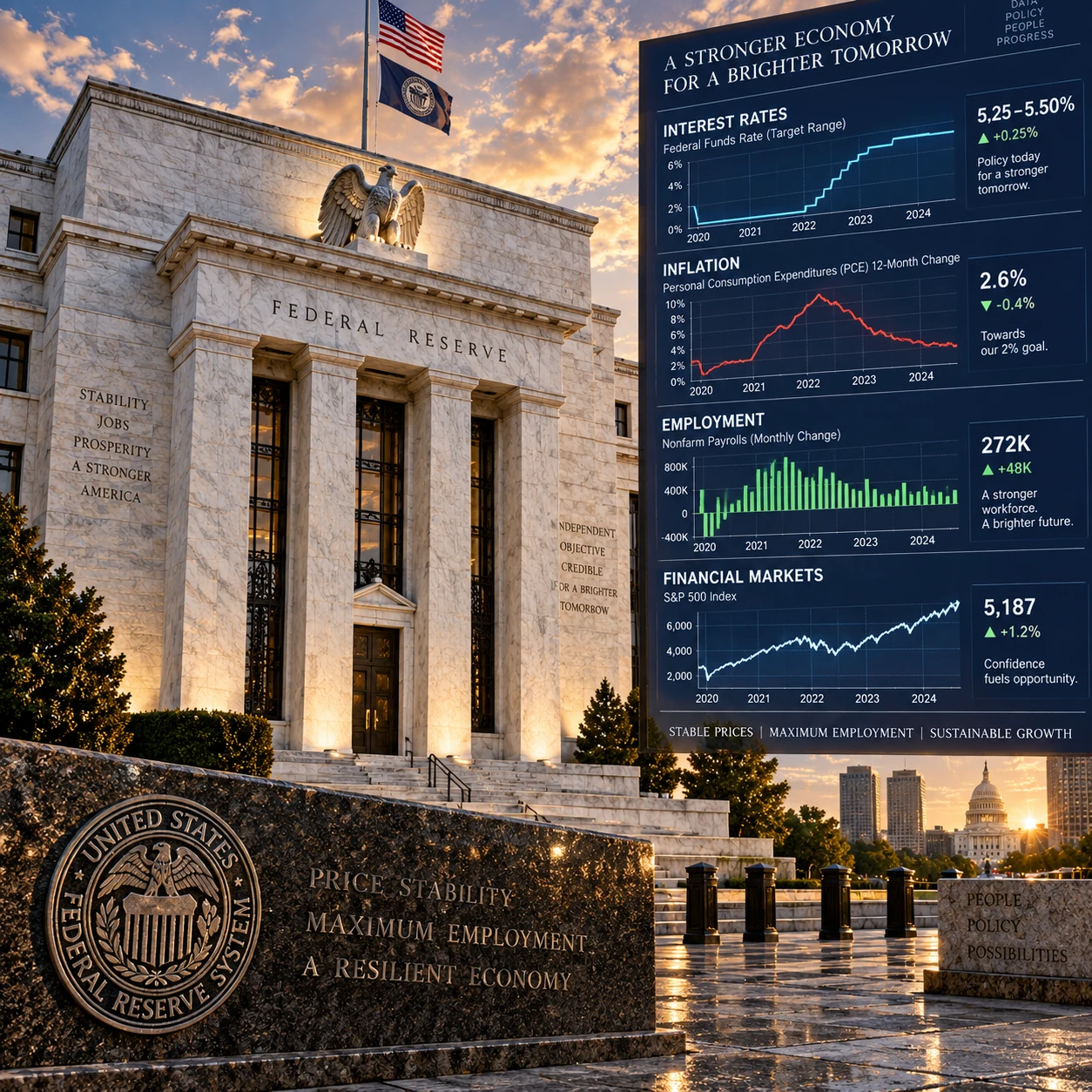
Federal Reserve rate announcements can move financial markets and influence the cost of loans, savings, and business investment. To understand them, it helps to know what the Fed actually controls, which economic signals policymakers assess, and why a decision to raise, cut, or hold rates is not a guaranteed forecast of what comes next.
What the Fed’s Interest Rate Decisions Are
The Federal Reserve’s main interest-rate decision sets a target range for the federal funds rate, the rate banks charge one another for certain overnight loans. The Fed influences this rate through monetary policy, but it does not directly set every interest rate paid by households and businesses.
The federal funds rate is a benchmark within the financial system. The Federal Open Market Committee (FOMC) announces a target range, and the Federal Reserve uses its policy tools to keep the market rate close to that range. The rate can affect other borrowing costs because banks and investors take it into account when pricing loans and financial products.
That influence is indirect and varies by product. Credit card rates often move with short-term benchmarks, while mortgage rates can respond more to longer-term Treasury yields and expectations about future inflation and Fed policy. Lenders also consider credit risk, competition, and their own funding costs.
The distinction matters: the Fed guides a key overnight rate; it does not dictate every mortgage, auto-loan, business-loan, or savings-account rate. A policy change may ripple through the economy, but the size and timing of that effect are not fixed.
Who Makes the Decisions and When
The Federal Open Market Committee makes the Federal Reserve’s monetary policy decisions, including its target range for the federal funds rate. The FOMC holds scheduled meetings during the year and communicates its decision through a policy statement and, at selected meetings, a news conference.
The committee includes the members of the Federal Reserve Board of Governors and Reserve Bank presidents, with voting participation set under the Fed’s rules. Members discuss economic conditions and risks before reaching a decision. They do not simply follow a mechanical formula or respond to one data release.
After each scheduled meeting, the FOMC publishes a statement explaining its decision and describing how it views the economy. At some meetings, the Chair answers questions at a press conference. The Fed also releases meeting minutes later, offering more detail on the discussion, though minutes are not a real-time transcript.
For a calendar and official policy materials, readers can consult the Federal Reserve’s FOMC meeting calendar. Scheduled dates give markets a focal point, but economic data and financial conditions can shift between meetings, so investors pay attention to speeches and releases as well.
What the Fed Considers Before Changing Rates
The Fed weighs inflation, employment, economic activity, and financial conditions when considering interest rates. Its policy goals are commonly described as maximum employment and price stability, and policymakers assess a range of evidence rather than relying on a single indicator.
Inflation shows how quickly prices are rising across the economy. Policymakers examine measures such as the personal consumption expenditures price index (PCE), along with trends in wages, housing, and services. They consider whether inflation is easing broadly or whether price pressures remain persistent.
Employment data help the FOMC judge the health of the labor market. The unemployment rate, job gains, labor-force participation, and wage growth can each add context. A strong labor market may support household spending, while signs of weakening employment can raise concerns about economic strain.
The committee also evaluates economic growth and financial conditions. Gross domestic product, consumer spending, business investment, and credit availability can help show whether demand is expanding or slowing. Policymakers consider the balance of risks: inflation could stay high, growth could weaken, or both could change at once.
No single report dictates the outcome. Economic data are revised, may send mixed signals, and often describe conditions that have already changed. The Fed therefore compares trends and uncertainty, not just the latest headline number.
Why the Fed Raises, Cuts, or Holds Rates
The Fed raises rates when it judges that tighter monetary policy may help bring inflation under control, cuts rates when support for economic activity or employment is warranted, and holds rates when it needs time to assess conditions. None of these choices follows automatically from one economic indicator.
Why raise rates?
A rate increase makes short-term borrowing more expensive across parts of the financial system. If demand is running ahead of supply and inflation is persistently high, tighter policy can reduce spending and investment over time. The trade-off is that excessive or prolonged tightening can also weigh on hiring and growth.
Why cut rates?
A rate cut can lower some borrowing costs and encourage spending and investment. The FOMC may consider cuts when inflation is easing and the labor market or broader economy needs support. Lower rates do not guarantee a quick recovery, and their effects depend on whether households and businesses are willing and able to borrow.
Why hold rates steady?
A hold can give policymakers time to see how earlier decisions are affecting inflation and employment. It may also be appropriate when incoming evidence is mixed. Keeping rates unchanged is an active policy choice, not proof that the Fed has finished adjusting its stance.
How Rate Decisions Reach the Economy and Markets
Federal Reserve decisions reach the economy through borrowing costs, saving incentives, asset prices, and expectations about future policy. These effects take time, vary across households and businesses, and can move differently from one financial market to another.
When the federal funds rate rises, short-term market rates often respond quickly. Some variable-rate credit cards and loans may become more expensive, while new borrowers may face higher costs. Savers may see improved rates on some deposits, though banks do not pass policy changes through uniformly. Businesses can also reconsider borrowing, hiring, or investment as financing costs change.
Treasury yields are market interest rates on U.S. government debt with different maturities. They are distinct from the federal funds rate. Short-term Treasury yields may track expectations for near-term Fed policy, while longer-term yields also reflect views about future inflation, economic growth, and the compensation investors demand for holding longer-dated debt.
Market expectations can matter as much as the announced change. If investors already expect a rate increase, the decision itself may bring little surprise; a shift in the Fed’s explanation or outlook may have a larger effect. Stock prices can react to changes in expected interest rates, company earnings, and risk appetite, so a rate cut does not automatically lift the market.
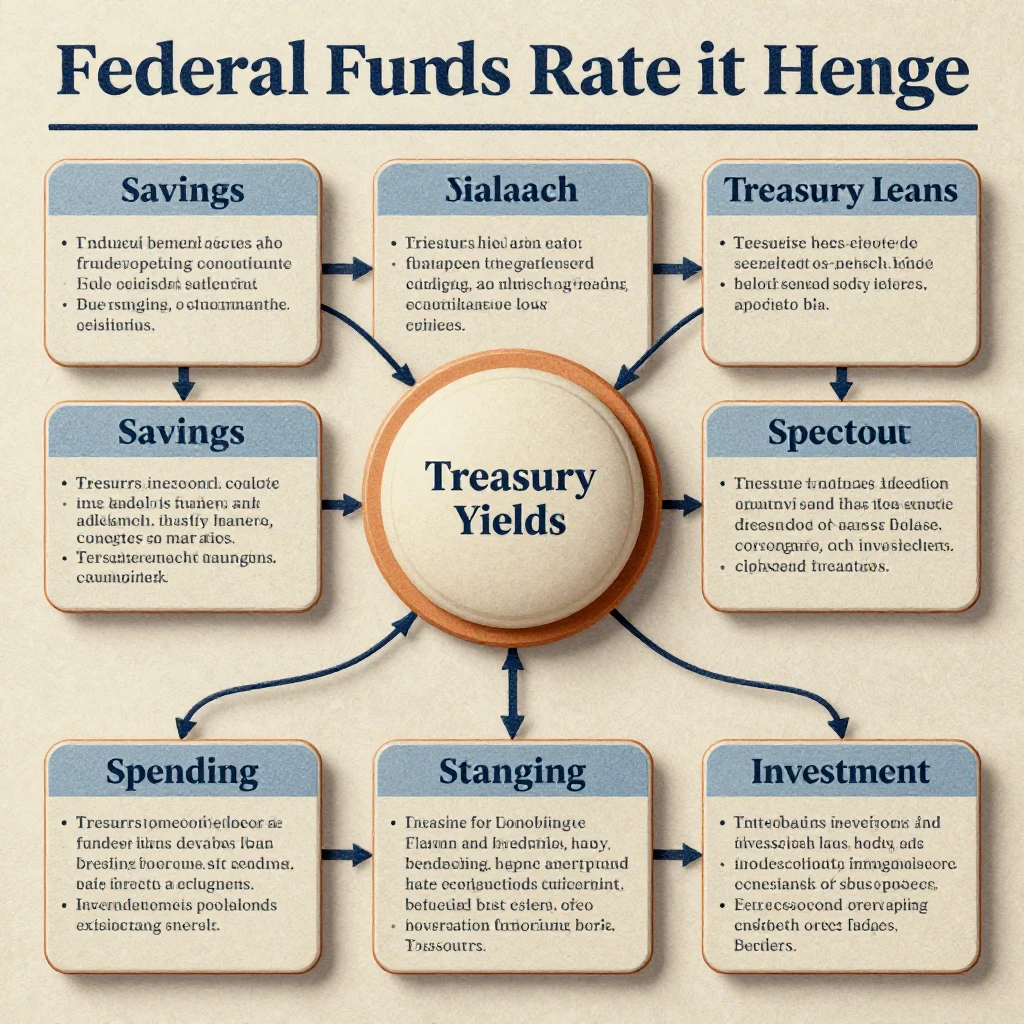
The effects are uneven. A household with variable-rate debt may feel a change sooner than one with a fixed-rate mortgage, and businesses differ in their debt levels and financing needs. Monetary policy is a broad tool, not a precise adjustment for every borrower.
How to Read a Fed Announcement
To read a Fed announcement, check the rate decision first, then read the statement’s explanation and listen for how policymakers describe the outlook. Compare the language with the previous statement to see what changed and what remained uncertain.
- Identify the decision: Note whether the FOMC raised, lowered, or maintained its target range for the federal funds rate.
- Read the rationale: Look for the committee’s assessment of inflation, employment, and economic activity. Pay attention to any change in its description of risks.
- Separate action from outlook: The decision applies to current policy. Statements about possible future moves are conditional, not promises.
- Check the wider context: Consider the press conference, meeting minutes, and later economic data. One announcement does not settle the path of policy.
A common reading mistake is to treat a rate hold as a commitment to keep rates unchanged, or a cut as a forecast of rising stocks. The more useful question is what policymakers said about the economy and how that compares with market expectations. These signals can inform general understanding, but they are not individualized investment advice.
Frequently Asked Questions
Does the Federal Reserve set mortgage and credit card rates?
No. The Fed sets a target range for the federal funds rate and influences other rates through monetary policy. Mortgage and credit card rates are set by lenders and markets, and can also depend on loan terms, credit risk, and longer-term rate expectations.
Why might the Fed hold rates steady?
The FOMC may hold rates while it assesses how earlier policy changes are affecting inflation, employment, and growth. A hold can also make sense when economic indicators point in different directions.
How can a rate decision affect the stock market?
A decision can influence expectations for company borrowing costs, consumer demand, and future earnings. Stocks may rise or fall depending on whether the announcement was expected and how investors interpret the Fed’s outlook; the direction is never guaranteed.
What is the difference between the federal funds rate and Treasury yields?
The federal funds rate is an overnight interbank rate guided by the Fed’s target range. Treasury yields are market-determined interest rates on government securities with different maturities, shaped by expected policy, inflation, growth, and investor demand.